Sunday, October 18, 2015

Luling Skies Observatory Construction, Pier

I have only been in this hobby since 2011 but I've come to greatly enjoy my time out under the stars, with or without a telescope.  As with most hobbies, the time available is limited by work and family commitments and of course by poor weather conditions.   It takes about an hour to setup my equipment and start viewing and then another hour to tear down at the end of the night.  That doesn't leave much time for viewing unless I stay out four or more hours.  I started to consider the convenience of having an observatory where I could leave my equipment setup.  That would allow more productive use of my available observing time.

Living in a semi-urban area, my skies aren't great.  My best Sky Quality Meter readings are around 18.65 (magnitude ~ 4.5).   Despite this, with my Mallincam video camera and a light-pollution filter, I've been able to see many deep sky objects.  Nothing can replace having really dark skies, but with my astro-gear, the skies in my area can provide rewarding observations.  I've seen many astronomers on the Night Skies Network broadcasting from highly light-polluted areas.

After scouring the internet for months, looking at hundreds of pictures, and reading scores of web pages, blog posts, and forum conversations, I decided on a roll off roof design.  I wanted an office space for my computer out of the dew and away from the mosquitoes.  Also as my daughter Heather is responsible for getting me into this hobby, I wanted enough space for her scope so we could view together.  I decided on the below design.


At 8 x 16' it isn't spacious, but should be adequate.  I decided to have Tuff Shed build it as I've been happy with the shop they built for me a few years ago.  Browsing their web site I found that the company has built a roll off roof observatory in California.   More on the building design and construction will be posted later as construction progresses.

The G-11 tripod is huge so I decided a pier was needed.  After much reading I decided on  a 10" concrete pier.  I wanted it to be the same height as the G-11 tripod above the floor of the observatory.   I drew up some plans and sent them to a local contractor who recently poured a driveway for our camping trailer.  I was impressed with their work and figured they would do a good job.  I planned on a 3' x 3' x 20" footer for the pier with rebar through the footer and pier.  The contractor convinced me that a wider and thinner footer would be more stable so we went with a 4' x 4' x 12" footer.  His plans are shown below.


On Oct 10, the guys built my pier.


To support the G-11 mount on the pier I used an adapter plate
Dan's Pier Plates.     After 3 days we back-filled the hole and stripped the cardboard form to reveal the pier.


On October 16, 2015 I setup the pier plates and mounted the G-11.   Everything went together well and solidly.


As darkness fell, I sighted Polaris and the polar alignment seemed close.  I installed the polar scope andnervously took a look to see if the scope was aligned with the celestial pole.  I was delighted to discover Polaris near the center of the field.  A few tweaks of the mount's declination and azimuth controls brought the star in line with the markings on the polar scope's reticle.  Successfully polar aligned, I was ready for some viewing.

>My daughter Heather came over and we had a great night viewing several star clusters, the Ring and Dumbell nebulas, and Uranus. They sky conditions were good with much lower humidity than normal for our area.  It took me awhile to reacquaint myself with the GEMINI system as it has been over 6 months since I last used my gear.  Once we overcame operator errors, the equipment performed flawlessly.  It was a good night and Heather and I both enjoyed our time under the stars.

I didn't take the opportunity to try out my Mallincam Extreme 2 which was recently upgraded by Rock Mallin to a XT-418 model.  The Argon purged sensor cell will come in handy in our humid climate.  I hope to squeeze in another couple of nights in the next few days as we have only a couple of weeks left to prepare our equipment and observing plans for the Deep South Regional Star Gaze, November 3-8, 2015.  Soon after the Deep South, Tuff Shed should build the observatory and my focus will be on getting it up and running.  First light should be in November.  Lots to look forward to in the next few weeks..

Monday, September 29, 2014

New Astro-Gear

Since starting in this hobby in 2011, I've often thought of when I would upgrade my equipment. I have used my Meade LXD-75 6" Schmidt-Newtonian reflector quite a bit and coupled with my Mallincam Extreme 2, I've seen more than I thought I ever would, especially from my light polluted backyard. As I tried to view deeper images I needed longer exposures on my Mallincam but my mount was struggling. I installed a Hyper tune kit on the mount and that got me to 75-90 second unguided exposures but there was significant image shift between images.

In mid-2013 I decided a new mount was necessary to move to the next level in observing. While I had owned only a GEM style mount, I had used my daughter's Celestron alt-az mount. Considering I would mostly be observing from my backyard I knew exposures of 2-3 min or perhaps a bit longer were in my future. Concerns of field rotation lead me to decide on a GEM design for my new mount. My 6" S-N reflector, camera, guider, finder, etc totaled nearly 30 pounds, so I knew I needed a mount with at least a 45 pound capacity, but 60 pounds would be better. In my shopping I studied the mounts by Celestron, Meade, Orion, and iOptron. I tabulated specifications, read reviews and user accounts from the Internet forums. I felt the new Ioptron IEQ45 might be a good fit for my needs. It got good reviews and was under constant improvement by the manufacturer. I was intrigued by the then new CEM 60, but it was too new for there to be much information available.

The upper echelon of mounts such as those by Astro Physics, 10 Micro, and Paramount were beyond my financial means. So I turned my attention to what appeared to be the intermediate level of quality, yet reasonably affordable mounts; Losmandy. I found the mid-priced Losmandy G-11 had very good specs, was solidly built, and the company had an excellent reputation. The Gemini control system was well respected and supported. Still with all the options I wanted it would cost around $4,000, a bit more than I had in my astronomy piggy bank. So I decided to get the Ioptron IEQ45 Pro. It would be a step up in quality from my LXD-75 and for considerably less money than the G-11. The order was placed in the summer of 2014, and then, my situation changed and more money became available for astro-gear. I canceled my IEQ 45 order and contemplated my new possibilities.

No I hadn't hit the lottery or robbed a bank. I still had limits to what I could afford, but my budget had grown. Spending my full budget on an Astro Physics or Paramount mount would be nice, but all I had to put on the mount was my Meade 6" S-N. Not a bad scope but I hoped for a bit more aperture. So I decided to go for the G-11 with Gemini 2 and a Mallincam Video Ritchey-Chritchen (VRC) 10" with a carbon fiber tube.

The Mallincam Optical Tube Assembly (OTA), produced by GSO, gave me a significant boost in aperture (6 to 10") and the Ritchey-Chritchen design is great for imaging.  The carbon fiber tube ensures minimal dimensional changes during an observing session and it is well baffled to minimize internal reflections.  The weight is only 34.4 pounds so it is manageable for medium capacity (45 - 60 pound capacity) mounts.


The G-11 mount is a monster compared to my Meade LXD-75 mount.  The Loasmndy tripod is well made and very stout.  The mount clutches can be a bit hard to operate but substituting the optional knobs with 3 "handles" makes it much easier.  The motors easily handle my scope and associated gear as long as the system is appropriately balanced.  The Gemini system is not as intuitive as the Meade system and it took some getting used to but the excellent Gemini 2 web page by Tom Hilton and the Gemini web page by creator Rene Gorlich eased the learning curve.

I would have little time to learn the new system before attending the 2014 Deep South Regional Star Gaze.

Sunday, December 1, 2013

Comet C/2012 S1 ISON - Obituary ??

Since imaging comet C/2012 S1 ISON at the Deep South Regional Star Gaze (DSRSG), see my previous post, I have been fascinated by this visitor from the outer reaches of our solar system - presumably the Oort cloud.  {The Oort cloud is thought to be roughly a light year away and is considered to be source of many of the comets we observe in the inner solar system.}  According to a NASA website, around one million years ago, a rather unremarkable cloud resident was ejected and gravitational forces destined it to a perilous journey to the inner solar system and a close encounter with the sun.

Fast forward to Sept 2012 when Russian astronomers, Vitali Nevski and Artyom Novichonok, discovered the small,bright object when it was some 585 million miles distant, just beyond the planet Jupiter. Detailed measurements of it's trajectory revealed the comet's rendezvous with the sun would be a very close one.  If it survived ISON would likely put on a brilliant post-perihelion display in December of 2013.  However the relatively small size of the comet ( 3-4 miles in diameter) and the closeness of its approach to the sun make its survival a IF.

There has been much speculation in the astronomical community and some have dubbed ISON to be the "comet of the century".  The wide spread use of social media have enabled astronomers to reach millions with ISON's story and the public news media has been a buzz about the potential for a spectacular show.  Such public outreach is vitally important to astronomy and science in general as it offers the potential to inspire the next generation of would-be scientists.  A bright comet appearing in the night sky, and possibly even during  daytime, could make an indelible imprint on many young minds that could lead them to study science and eventually a scientific career.   Conversely, if the much hyped event turns out to be a dud, we could loose this opportunity.

Since ISON's sun grazing on Thanksgiving day, astronomers have been anxiously watching to learn the comet's fate.  Early reports were that it had disintegrated upon approach to the sun.  Then came reports of survival, albeit badly wounded, with intriguing pictures of a fan-shaped trail emerging from the sun's glare.  This morning the reports are that the object is rapidly fading, suggest that ISON may be no more that a debris field scattered by the solar wind.  The final ISON images as it passes away from the SOHO cameras show ISON's demise.  The final analysis will have to wait a few more days.  Possibly later this week ISON's remnants will be visible in the predawn skies low in the east-southeast, but it is unlikely to be visible to the naked eye.  Weather permitting, I'm planning to try for one last image this coming weekend.

Saturday, November 9, 2013

2013 Deep South Regional Star Gaze

My wife Cindy and I arrived at the Feliciana Retreat Center around 2:30 pm on Wednesday Oct. 30 for the 2013 edition of the Deep South Regional Star Gaze. This is our sixth star party at this venue so we are  getting the hang of things.  It is a well run event at a great location and the skies are quite dark offering very good viewing.  This time however our stay will be different because we now have a Tracer 2700RES travel trailer. Staying on the observing field will make it easier to pop in for a coffee refill or to warm up a bit without the ¼ mile walk back to the room in the dark. More importantly having a trailer close by the scope will allow Cindy to participate more as the walk from the room to the observing field was difficult for her.  In preparation for having a trailer on the observing field we covered the windows with aluminum foil and I built skylight covers from Styrofoam covered in black cloth.

In the days leading up to the DSRSG I was hopeful for some good observing sessions.  As chronicled herein, my last 3 star parties have hit significant snags, so I felt I was due a good one. Additionally the weather this summer in south-east Louisiana has offered very few decent observing nights, especially Friday or Saturday nights. So as the DSRSG approached I watched the weather with anticipation of a cold front that would come through and clear out the skies. The cold front did finally arrive, but not until Thursday evening. So Wednesday night was near total cloud cover and Thursday afternoon and evening were stormy.  Early Friday morning the clouds cleared out and Friday was a beautiful day for setting up equipment and a few got in some solar viewing.  Friday also saw the arrival of our daughter Heather, her husband Eric, and son Brandon.  Our party was now complete.

Friday evening as dark fell I eagerly waited for the stars to come out.  As those little pinpoints of light came into view across the sky the sound of Dec and RA motors filled the night air.   After carefully polar aligning my mount I aligned on Vega, Kokalb, and Fomalhaut.  I've found that aligning using the Mallincam and a 7" monitor at the mount provides very good results.  I fired up the Miloslick Mallincam Control software, which I bought a few weeks ago after hearing rave reviews from several broadcasters on the Night Skies Network.  I've only used it a couple of times, but I find the interface intuitive and thus far I really like it.  After I work with it more I may publish a review here.

I fired up Sky Charts and connected to the mount. I've used the Meade Autostar program and Stellarium to control my mount, but I've learned to really like Sky Charts.  I was now ready to roll.  I fired up  Deep Sky Planner and pulled in my Messier and Caldwell observing plan to pick the nights first target: Messier 20 - the Trifid nebula.  I hit the goto button on Sky Charts, motors whirred, I set the Mallincam for a 60 second exposure at AGC 4, and hit theMiloslick shutter button.   When the countdown timer expired, I was rewarded with a nice image of the Trifid nebula, which I've always thought looked like a red, squinting feline.  The nebula was just lower left of the center of the frame.  As I moved from object to object during the course of the night, all requested objects popped right into view.  I was very pleased with my LXD-75 mount's go to accuracy.  Here are several of the images from that night.  All are single exposures with no post processing.


The face of a red, squinting feline
 I have to trust that this is a object is a nebula as it looks like a bright star.

 M13 was low in the Southwest, actually too low as this shot is through some tree limbs.
 Messier 22 is a beautiful globular cluster, but it too was shot through the trees.  Much of the left side of the image is obscured by leaves.

 In my opinion, the dumbbell is one of the nicest deep sky objects.
 Messier 30 is a rather unimpressive globular.


 The Sculptor galaxy is one of my favorite objects.


 A ghostly face in the sky.


The mount's tracking is a bit sloppy so my images are limited to less than 90 seconds.  I need to take some time to lube and tighten the gears.  The night went very well with 17 objects imaged. Clouds rolled in around 1:00, in bed at 2:30.  Meant to get up at 4:30 to see ISON but overslept and din't get out til after 6 and it was too light by the time I got the equipment set up.

I got a Unihedron Sky Quality Meter-L for my birthday. I tried it a few times between 10 & midnight and obtained readings averaging 21.10 MPSAS (Magnitudes per square arcsecond) = (approximately 6.2 NELM (Naked Eye Limiting Magnitude)). Significantly darker than the 18.1 – 18.5 MPSAS readings I obtained in my backyard.


Saturday, Nov. 3 - Had a very nice day visiting with old friends, grilling out hamburgers with Heather's family, and watching some football on TV.  The highlight of the day was the group picture and the drawing for the door prizes.
The hopefull waiting to see if their number is drawn for one the nice prizes.  Up for grabs were 2 refractors, eyepieces, and various other astronomy items.  On Friday I won a 1-1/4" Televue 2X Barlow - a nice addition to my collection.


 A couple of looks at the field.

 Telescopes of all types and sizes.

Somehow I missed taking a picture of the Southeast side of the field where Heather and my scopes were set up.


As darkness fell the outlook for the night was great.  It was drier than Friday night and the seeing was better.  Shortly after 7 I aligned on Vega, Kokalb, & Fomalhaut.  The go to accuracy was again very good.  I was able to image 10 objects on my list.


 An open cluster in a rich star field can be difficult to discern from the surrounding stars.  Here I've taken images of M23 at 3 different exposure durations.  Here at 5 seconds the cluster is more evident.
 Here at 10 seconds it is difficult to pick out the cluster.
Here at 20 seconds the cluster is lost in the star field.  


 Imaged through the trees.


At 9:27 sky meter read 21.09, similar to this time last night but the seeing is better tonight.  At 11:30 got reading of 21.05 – 21.11 at 9 C very clear night and much drier than last night.  Went in around midnight so I could get up to see ISON.  Came back out at 4:30 and fired up the scope to target ISON. Tried to align to Dubhe and Denebola but the alignment failed.  I did a 3 star alignment and went to Denebola and realized I had been choosing the lower star in Sextans instead of Denebola !!! I was too anxious and didn't look closely enough at the sky. At this site the sky is so dark I see many more stars than at home and got confused.  After Denebola I jumped to M65 .  This is a nice galaxy and a member of the Leo Triplet of galaxies.


I told Sky Charts to drive the scope to ISON. I hit the shutter button and waited. Bam, there it was almost dead center in the FOV. A bluish-white core with a distinct halo and a nice but faint and rather short tail. The visible tail was only about 12 arcmin long but the last half is really faint in the pics. I'm not sure of the magnitude as there are no stars in the neighborhood on my charts to gauge the brightness against.  For my best pic I moved the core down a bit and tried to tease out a bit more of the tail.  Jumping the AGC up to 6 yielded a washed out image with less of the tail visible because dawn was approaching.


 The DSRSG was over.  I had checked 27 objects off my observing plan plus ISON.  After 3 disappointing star parties, the 2013 DSRSG was a resounding success.  A benefit of having the trailer is having television so we could watch the first half of the Saints game before heading home.

There are 109 Caldwell objects, but 18 are not viewable from my latitude.  There are 110 Messier objects that are all viewable, so my observing project includes 201 objects.  There are probably a few duplicates between the 2 lists but I haven't yet identified them.   I had 99 done before the star party and was able to image 27 Messier & Caldwell objects at the DSRSG.  I have bagged 126 objects so I'm 62.7% of the way to my goal with 10 months left to go.  

Saturday, July 6, 2013

2013 Spring Star Parties

March 13 - 17, 2013 Hodges Gardens Star Party

The Baton Rouge Astronomical Society held the fifth annual Hodges Gardens Star Party on March 13 – 17, 2013 . Heather nor I hadn't been to this star party before so on Friday March 15 we made the 4-1/2 hour drive, arriving late in the afternoon. The state park has a few nice cabins on a lake although they are ~ 2 miles from the viewing area. There are a couple of areas for RVs about a ¼ mile from the viewing area and there were a few people with motorhomes, but many roughed it on the field. We were glad to have a cabin as they are much more comfortable than tent camping with no electricity and using Porta-Potties. The viewing field is large with pretty good horizons, but the ground is very uneven and dusty. There were 15 - 20 scopes setup and we learned that some people had left after Thursday night.


We set up our equipment on the field, which was rather challenging with the near constant wind and occasional strong gusts. We hurried back to the cabin to unpack. We got back to the field at dusk and settled in.


We didn't catch comet PANSTARRS (C/2011 L4) as it was lost in the tree line. As darkness set, my first target was the Leo Triplet. Seeing was pretty good and I got a few good shots of M65, but the wind kept my scope vibrating and ruined many images.


We left the field for a bite to eat and when we returned, clouds had rolled in. We tried for a bit longer but my camera had stopped functioning so we called it a night.

Saturday was a nice day, although partly cloudy. I managed a some solar viewing with my Coronado PST, but the wind was persistent with blowing dust, grass, and pollen. Saturday night was open to the public for the first couple of hours after dusk. It was a well organized event with trailers pulled by tractors to move the public from the parking area to the viewing field and back. After some work I managed to get the camera up and going and was able to show many people the Orion nebula and other sky wonders. For public viewing, being able to show things on a screen is much easier than trying to help numerous persons see through the eyepiece. I guess 30-50 people came by Heather's and my scope, not a bad turnout.

After the public viewing, I settled down to do some observing and my camera promptly died. The power led was on, but no video on either channel. After about an hour troubleshooting, I gave up and enjoyed visual observing the rest of the night. The next morning we packed up and noted EVERYTHING was coated in dust and pollen. Long cleaning sessions awaited us when we got home.


Focuser Replacement
I sent my MallinCamin back to Rock for repairs when I got home. This seemed like a good time to upgrade my scope's focuser. I bought a Moonlite focuser with DC motor drive. When the unit arrived I was awed by it. It looked and felt like a precision instrument, especially compared to the plastic stock focuser.


I must say I was a bit intimidated at having to strip the optical tube down, especially removing the corrector and secondary mirror assembly. The hex head on one screw on the corrector stripped partially when trying to remove it. I cut a slot in the screw head with my Dremel tool and used a screwdriver to loosen the screw. The primary mirror and stock focuser came off easily. The Moonlight adapter for this scope aligned well to the stock focuser holes but the hole in the optical tube was too small for the draw tube by about 1/16". I enlarged the hole with the Dremel tool and grinding bits. The Moonlite focuser then bolted on easily and square. After thoroughly cleaning the optical tube, I painted the mounting screws flat black. I reinstalled the primary mirror and corrector plate and then I had to realign and collimated the optics as every component had been removed. Aided by Heather's Hotech Collimation device, this chore was a pain but not as bad as I feared.


In late April I received my camera back, but poor weather kept me from trying it out. On May 4 I was finally able to try the new camera with the new Moonlite focuser. The scope goto performance was poor but I got a few nice shots to demonstrate the new camera and focuser were working well. Next stop, the Deep South Spring Scrimmage.


May 9-12, 2013. DSRSG Spring Scrimmage

My wife Cindy and I arrived on Thursday to overcast skies and a forecast threatening thunderstorms.


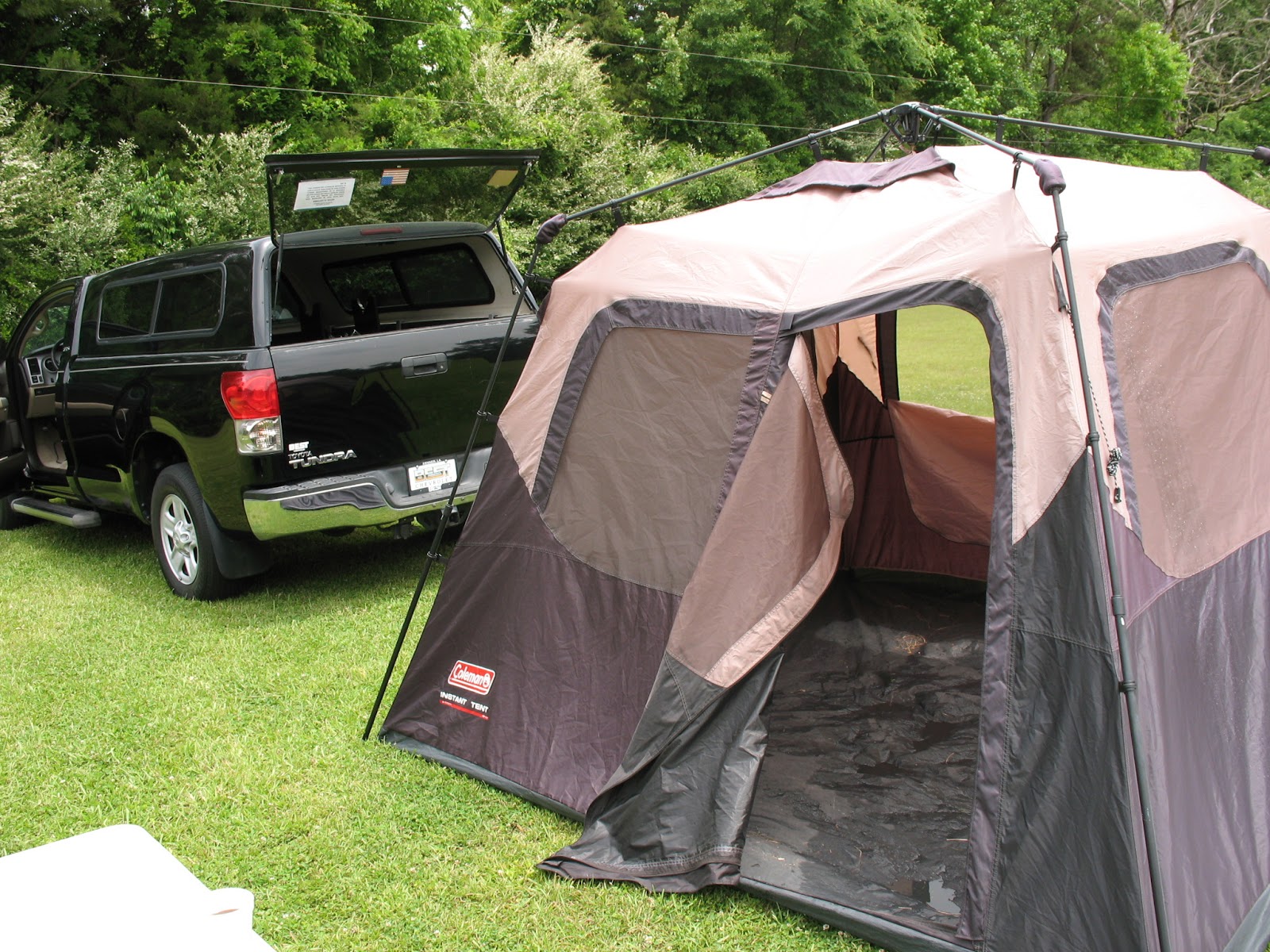
I set up the tent and tarp and the ETX 90 I won at the April PAS meeting.


There were just a few of us hardy souls; Barry, Ron, Frank, Walter, Ronald, Gabe, & Rod Molise. It was obvious there would be no viewing that night. We had hard rain and thunder storms during the early morning hours Friday. Come morning I found about 1/2 gallon of water in the tent, not sure from where. I also got a little water leakage into the back of my truck ( new to me 2008 Toyota Tundra) where the rest of my gear was. I will definitely have to get that fixed and also get a rainfly for the tent. The ETX stayed out covered but still was very wet.

During the day Friday the forecast slowly improved so we all set up at dusk with high hopes but little optimism. As daylight faded out popped Arctutus. It played peek a boo for a bit but slowly more and more stars became visible. Sirius, Saturn, Ursa major, Polaris, etc. the humidity is 100% and everything is wet. I tried to mount a new Telerad base to the 10" Dob but it wouldn't hold. Trying to sight without a finder is tough, at least for me. The ETX was totally fogged over inside. I put dew heaters on high on the corrector and eyepiece and the views slowly improved. I went back to the room at 10:30 for coffee. I noticed Scorpius starting to rise in the southeast. If the weather will hold perhaps I can view the globulars in this region in a few hours. I returned to the field at 11:30 and the skies were clouding up and ground fog was building. The others had already packed up so I did the same and the night was done.

Saturday I awoke to cloudy skies yet again. The forecast was for rain and then slowly clearing skies. After breakfast I went down to the field and discovered more rainwater in my tent. I opened up the tent and set things out to dry, but with the high humidity and overcast sky, drying would take a long time. As we sat on the field talking about astronomy, astronomy equipment, and most every other topic imaginable, I came to realize this was it. Good company and conversation but there would be no solar viewing opportunities that day and most likely no good viewing that night either. I texted my daughter Heather not come up, called my wife and advised her we were leaving after lunch, and started packing up the truck. I hate putting up my gear, but at least I hadn't pulled very much out. We had a good lunch at the FRC and then hit the road. On the ride home we discussed that we were glad we came despite the poor viewing. This was my sixth star party and while it wasn't technically a washout, I had achieved very little viewing.

I awoke the next morning to messages that the weather at the scrimmage had cleared Saturday night and the viewing was pretty good. Rod Mollise reportedly put on a nice show of several faint Hershel objects. So at least the last night was a good one, even if most everyone had given up and gone home. Rod's persistence paid off.